

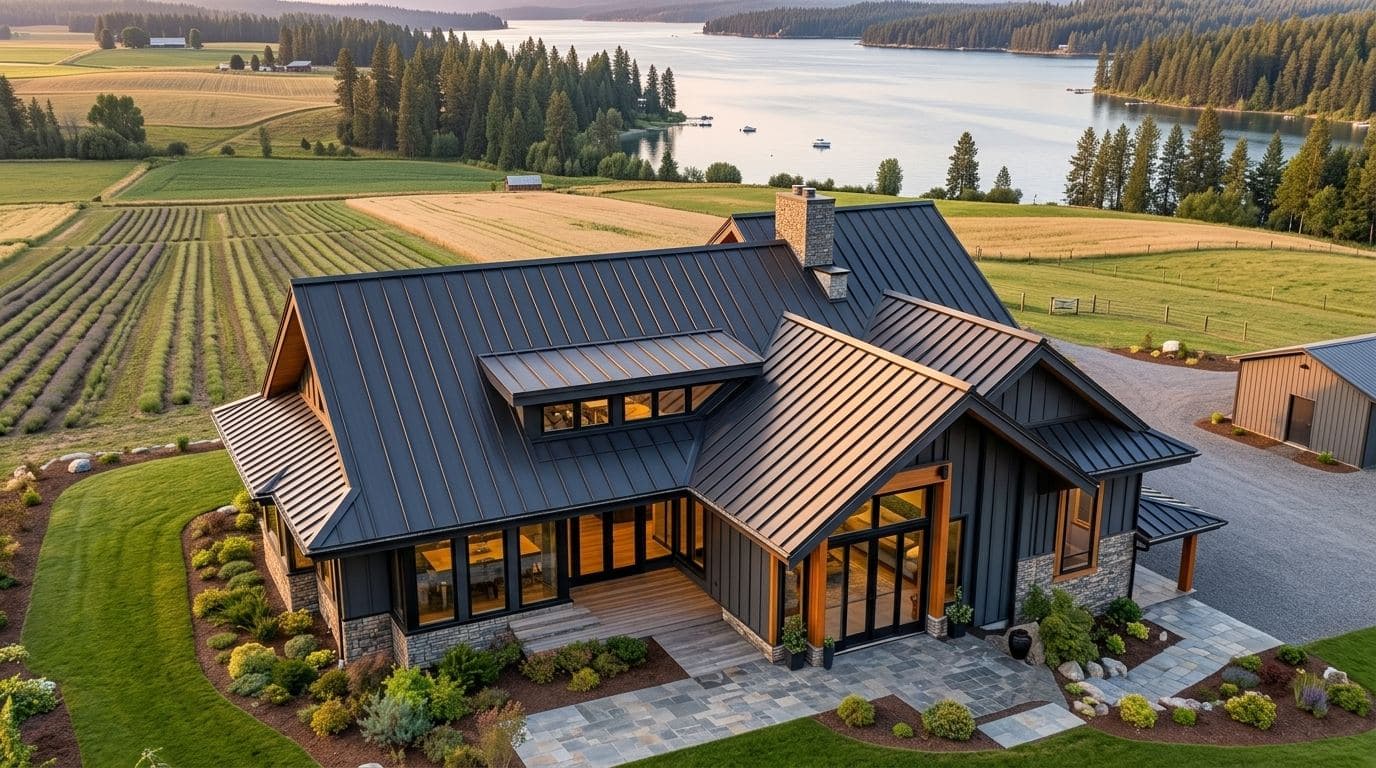
American made | American installed
Metal roofing in Idaho
WE DO ALL TYPES OF ROOFS TOO!
North Idaho roofs carry deep snow, freeze-thaw ice, and a growing wildfire threat. A premium metal roof sheds the snow, won't catch embers, and is installed by our local experts across the panhandle.
Get your instant roof quote
Enter your address and we measure your actual roof from satellite imagery — a detailed, itemized quote in under 24 hours, and nobody climbs on it.
- Measured by satellite — no rooftop visit
- Confirmed on-site by a licensed local expert
- No obligation, and nothing is ordered until you say so
Why metal wins in Idaho
In North Idaho, a roof is a snow structure first and everything else second. City roof-snow minimums run from 55 psf in Sandpoint to 70 psf in Bonners Ferry, and unincorporated parcels near Schweitzer and Spirit Lake climb well past that. Asphalt shingles carry that weight until they don't: ice dams back up under the tabs, meltwater refreezes, and a February thaw finds every seam. Under Idaho's freeze-thaw winters, a shingle roof ages in half the time the box promises.
Metal changes the physics. A smooth standing-seam panel sheds snow before it can sit, refreeze, and dam — cutting sustained load and the ice-dam leaks that plague shingle roofs. It's Class A fire-rated, the top rating there is, which matters more every summer as the panhandle's wildland-urban interface grows and smoke seasons lengthen. And with Idaho insurers non-renewing roughly 27,800 policies in 2023 over wildfire exposure — and no state FAIR plan as a backstop — a noncombustible roof is increasingly about keeping coverage at all, not just trimming the premium.
That's the North Idaho case in one line: metal sheds the snow, won't carry embers, and lasts 40–70 years in a climate that eats other roofs — usually the last roof a mountain home ever needs.
Idaho, region by region
Bonner & Boundary counties — deep-snow country
From Sandpoint and Ponderay on Lake Pend Oreille north to Bonners Ferry on the Kootenai River, this is the highest-load corner we serve: city roof-snow minimums of 55–70 psf, elevation-driven parcels far higher near Schweitzer, and ice-barrier underlayment required by code. Snow-shedding metal is the difference between a roof you manage all winter and one that manages itself.
Local pages: Sandpoint · Ponderay · Bonners Ferry
Kootenai County — Coeur d'Alene & the Rathdrum Prairie
Coeur d'Alene, Post Falls, and Hayden anchor the fastest-growing metro in the panhandle. Design roof loads run 40–50 psf across the prairie and higher toward Hayden Lake and the eastern foothills, with real wildfire exposure on the Fernan and Canfield edges. Metal fits the lakefront look and the mountain weather at once.
Local pages: Coeur d'Alene · Post Falls · Hayden
What a metal roof costs in Idaho
Real installed ranges — not teaser square-foot prices.
| Home | Installed range |
|---|---|
| Single-story, ~1,600 sq ft | $13,000 – $23,000 |
| Two-story, ~2,200 sq ft | $18,000 – $30,000 |
| Large or lakefront, ~3,000 sq ft | $26,000 – $44,000 |
Installed North Idaho ranges — exposed-fastener systems at the low end, standing seam at the high end. Snow-country detailing (snow guards, ice-and-water shield, heavier engineering for high-load parcels) and pitch drive the spread; your satellite quote prices your exact roof, not a square-foot average.
Deeper reading: Metal vs. shingles over 50 years · Is a metal roof worth it?
Design snow load by North Idaho jurisdiction
Idaho does not use the generic national snow map. Design loads come from the University of Idaho's *Ground and Roof Snow Loads for Idaho* and are applied site-specifically — which is why the number changes from town to town, and sometimes from one side of a street to the other. These are the published minimums our local experts build to; your parcel can be higher.
| Jurisdiction | Roof snow load (min) | Ground snow load | Note |
|---|---|---|---|
| Bonners Ferry (Boundary Co.) | 70 psf | ~75 psf (50-yr est.) | Highest city minimum in our network; raised in recent code |
| Sandpoint (Bonner Co.) | 55 psf | 56 psf | Ice-barrier underlayment required by code |
| Hayden — north of Miles Ave | 50 psf | 70 psf | Load steps up with elevation |
| Hayden — south of Miles Ave | 40 psf | 60 psf | Same city, different requirement |
| Coeur d'Alene (Kootenai Co.) | 40 psf | 60 psf | Higher toward the eastern foothills |
| Post Falls (Kootenai Co.) | 40 psf | 56 psf | Rathdrum Prairie floor |
| Unincorporated Bonner Co. / Schweitzer | 70 psf and up | Parcel-specific | Bonner County snow-load map governs; elevation-driven |
Ice dams: the leak North Idaho actually gets
Most winter roof failures here aren't collapses — they're ice dams. Heat escaping the attic melts the underside of the snowpack, the meltwater runs to the cold eave, refreezes, and builds a ridge of ice that backs water up *under* the roof covering until it finds the ceiling. Shingles are especially vulnerable because water can wick between the tabs. A smooth metal panel breaks the cycle at step one: the snow sheds before it can melt and refreeze. That's also why Sandpoint's code requires ice-barrier underlayment, and why any competent North Idaho install includes snow guards — shedding is the goal, but it has to be controlled so a winter's worth of snow doesn't come off over a doorway, walkway, or driveway at once.
Wildfire, WUI, and what a Class A roof actually does
Idaho's building codes largely don't dictate wildfire construction, and Kootenai, Bonner, and Benewah counties have few wildland-urban-interface zoning limits — so protection is the homeowner's decision rather than the code's. The threat is rarely a wall of flame; it's wind-blown embers landing on the largest, most exposed surface of the house. Metal is Class A fire-rated — the top rating, tested to resist flame spread and ember ignition — because steel and aluminum are noncombustible. Bonner County reports roughly 65% of its WUI is still undeveloped, meaning building is still pushing into fire-prone ground; the 2015 Cape Horn Fire above Lake Pend Oreille burned about 1,326 acres and destroyed nine homes near Bayview.
Permits, code, and how a reroof actually goes
North Idaho builds to the 2018 I-Codes (IBC/IRC), with local amendments setting the prescriptive snow figures above. A residential reroof generally requires a permit from the city or county building department; in Boundary County the program is administered through the Idaho Division of Building Safety. Expect the design load to be confirmed against your specific parcel — not a town-wide average — and expect steeper, more complex roofs to carry more engineering. Our local Metal Roof Experts pull the permit and build to the parcel's actual number as part of the job.
Idaho's insurance squeeze and the fire-rated roof
Idaho homeowners are in a hard market: insurers non-renewed roughly 27,800 Idaho policies in 2023 — up from about 3,900 the year before — largely over wildfire exposure, and Idaho has no state FAIR plan as a backstop. A Class A fire-rated roof is, per insurer studies, the single highest-impact wildfire mitigation a homeowner can make. The premium credit itself is usually modest; the real value in the panhandle is staying insurable — keeping coverage a carrier might otherwise decline or drop. Metal roofing carries that Class A rating natively.
Related: Does a metal roof lower insurance?
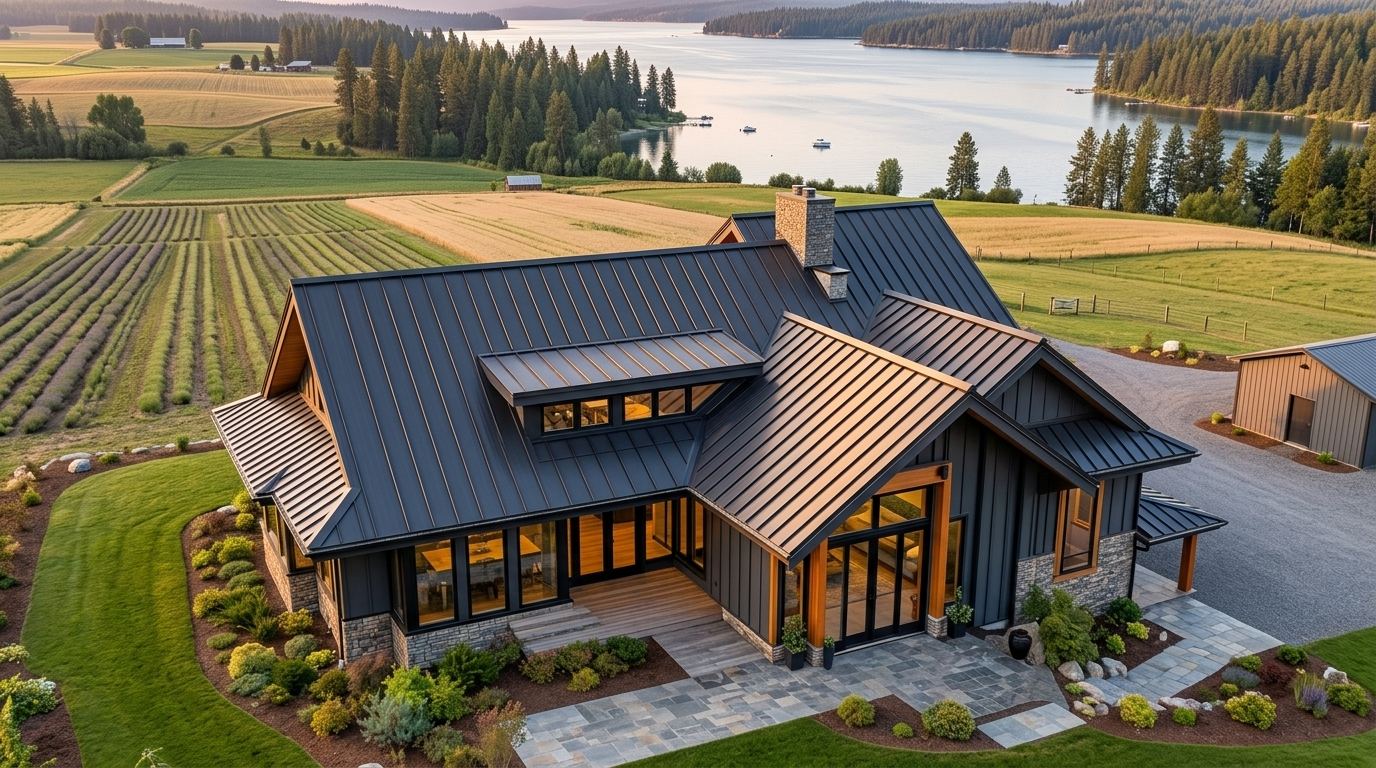
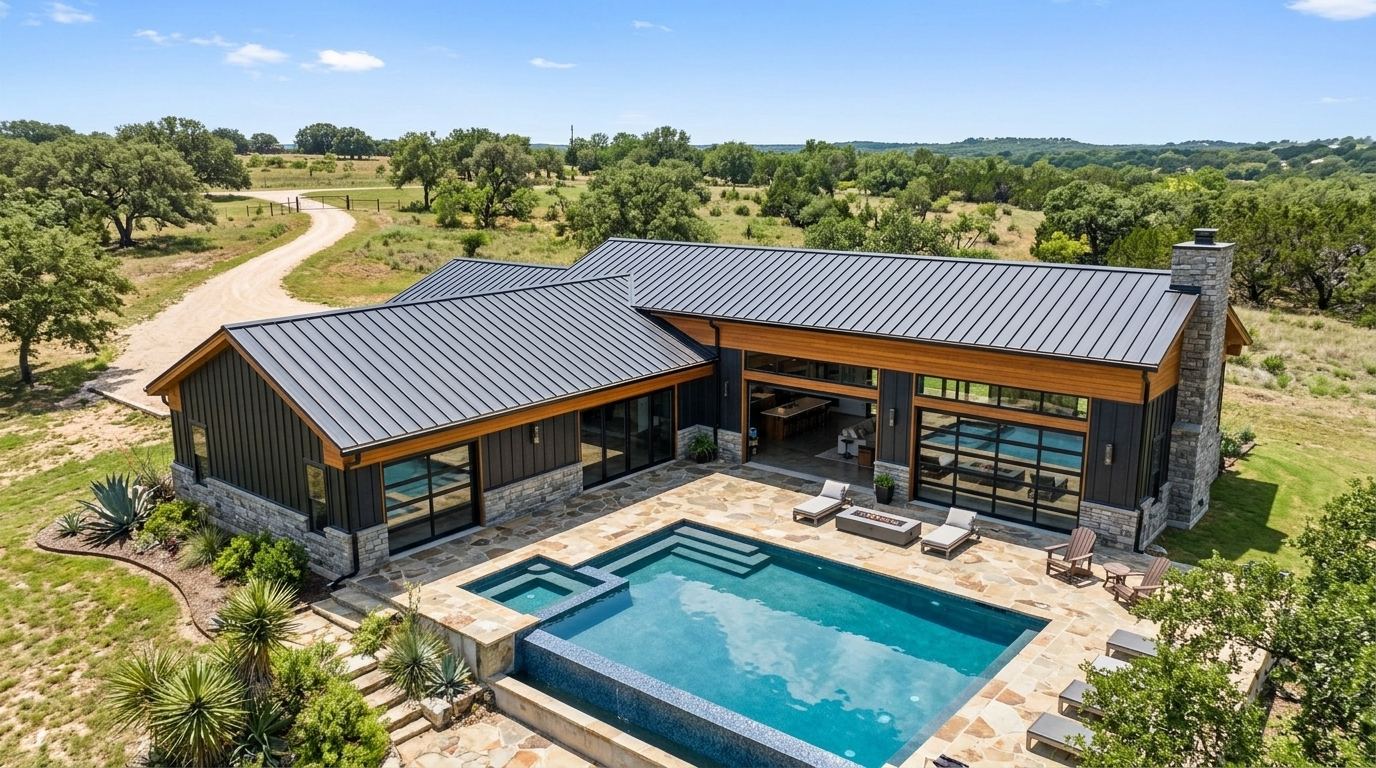
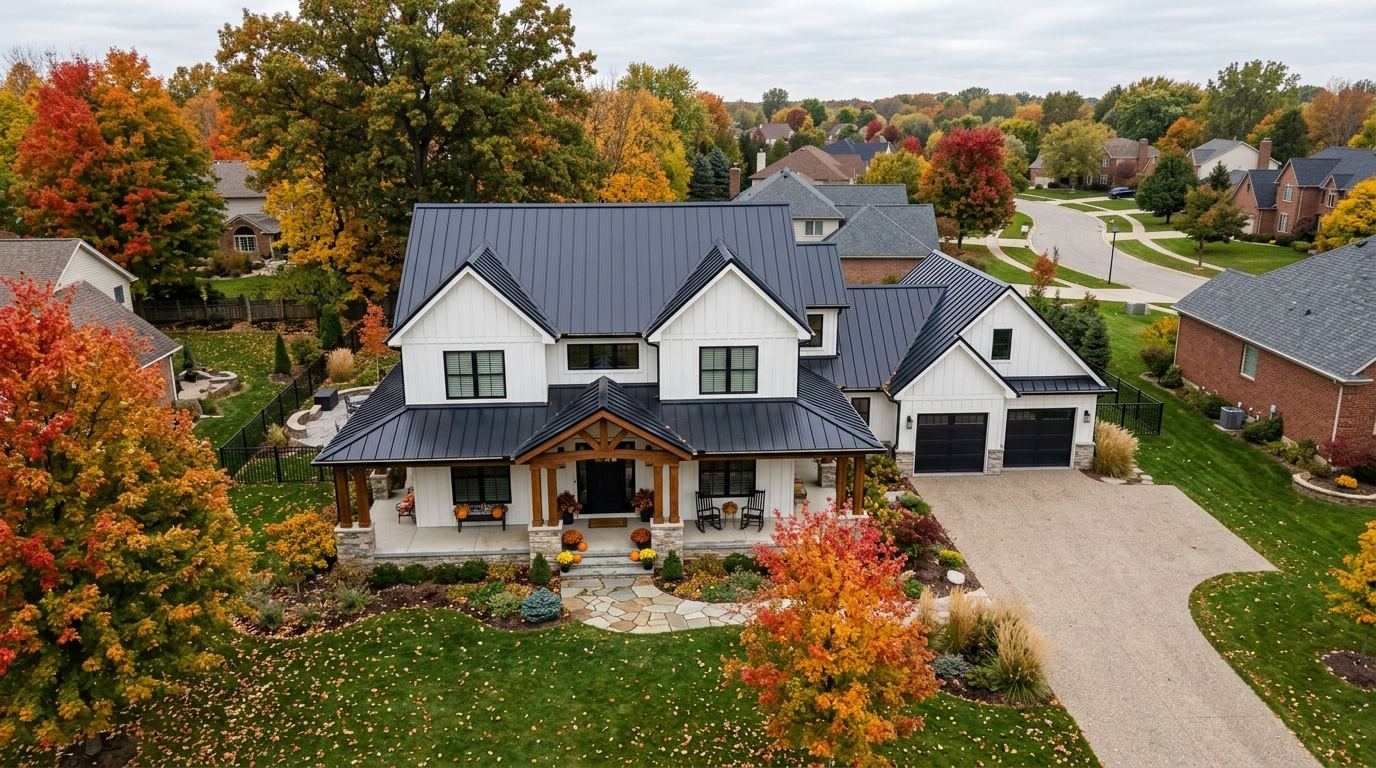
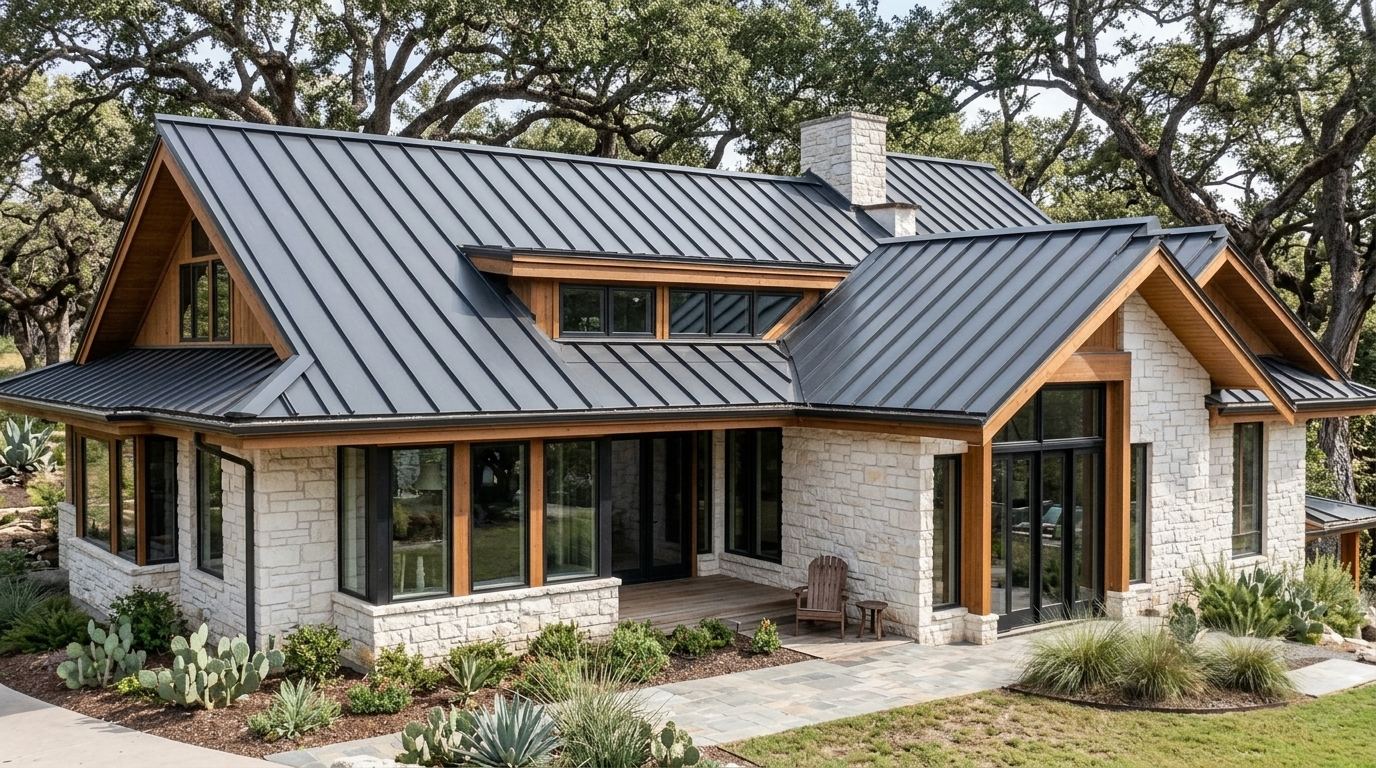
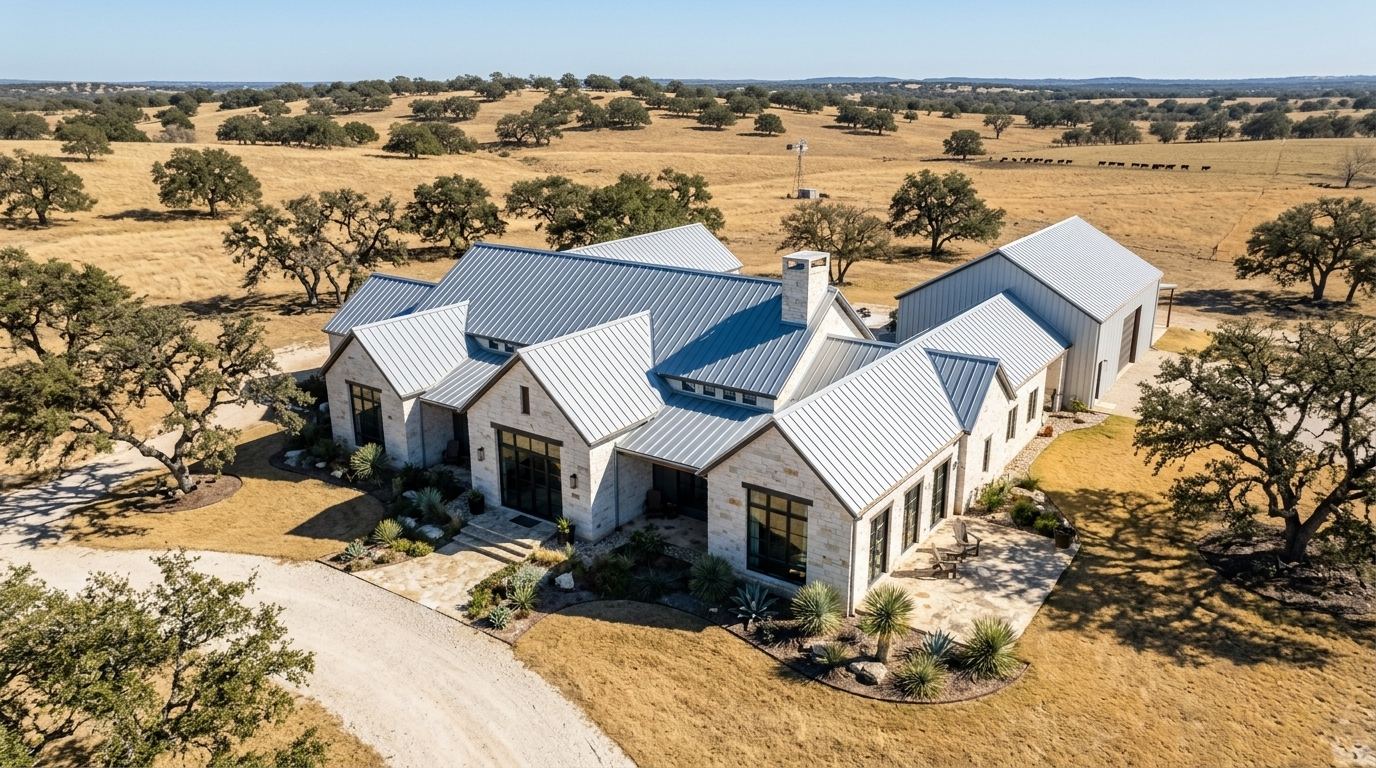
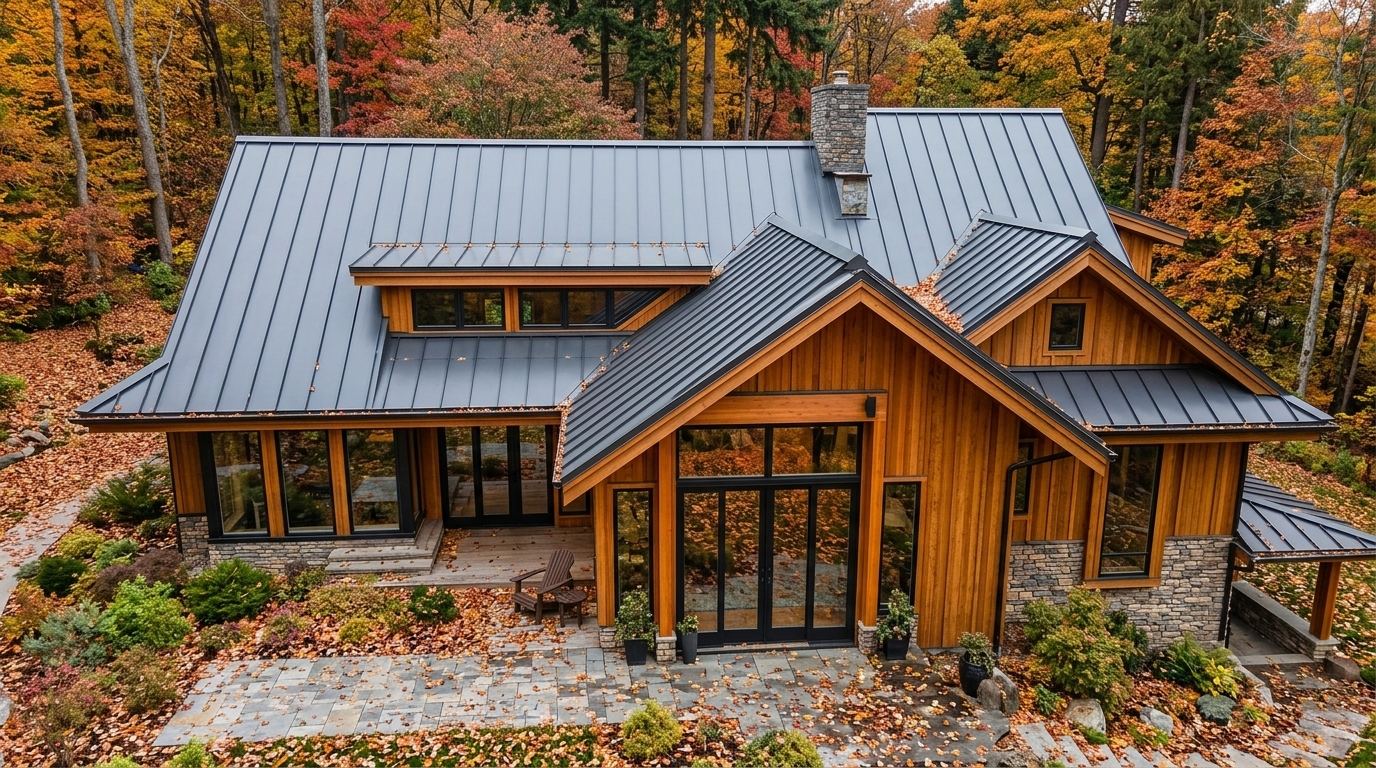
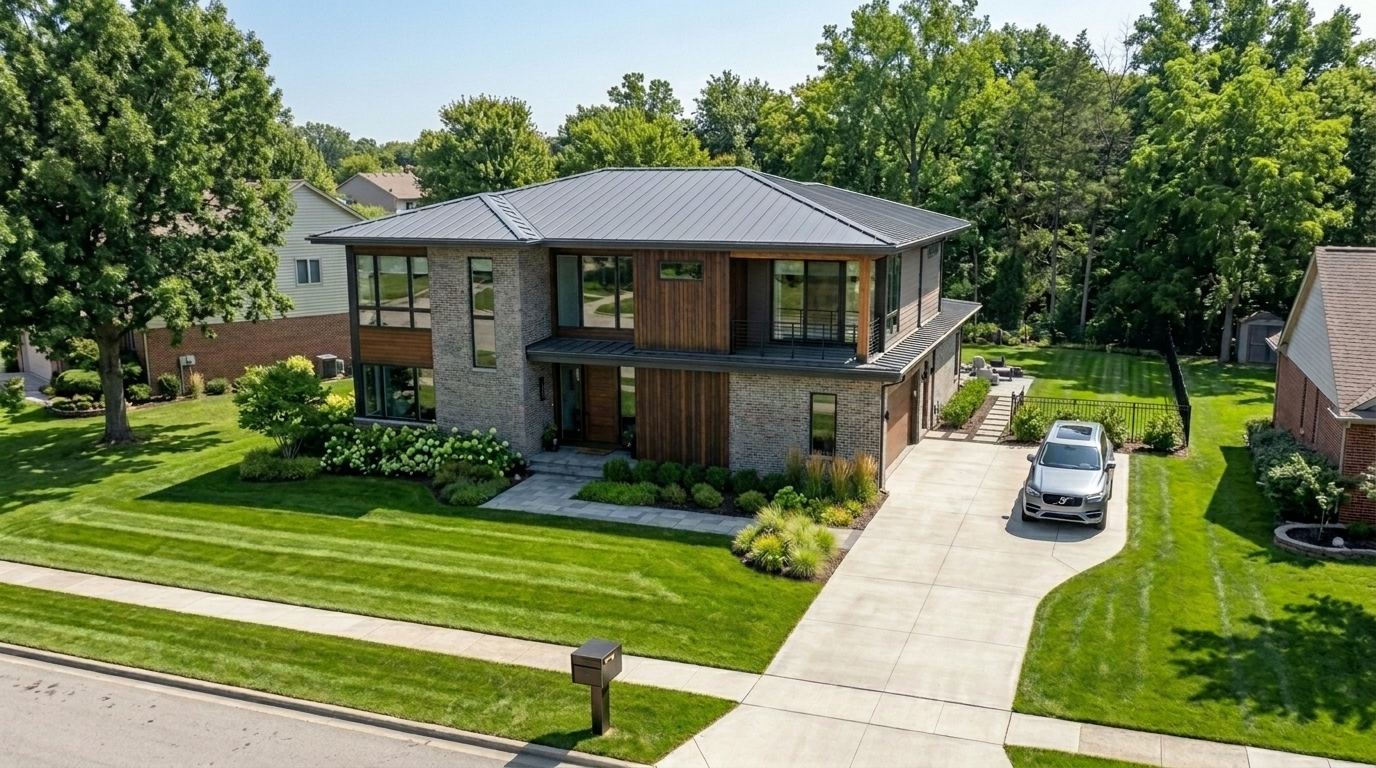
Metal roofs across Idaho
What Idaho homeowners say
Our Idaho Metal Roof Experts
Find your Metal Roof Expert in Idaho
Pick your city for local pricing, photos, and our local installers.
Idaho metal roofing questions
Page updated September 2026 · storm figures from NOAA county records, refreshed with each data release.
Ready for a roof built for Idaho?
Start with a detailed satellite quote in under 24 hours.